
International Program
Electrical
Engineering
International Program
Electrical Engineering
Electrical engineering involves the generation, storage, and use of electricity, as well as the transmission, distribution, and transformation of electrical energy. This program also provides trends in emerging technologies such as electric vehicles, railway electrification systems, renewable energy, and smart grids.
The commitment
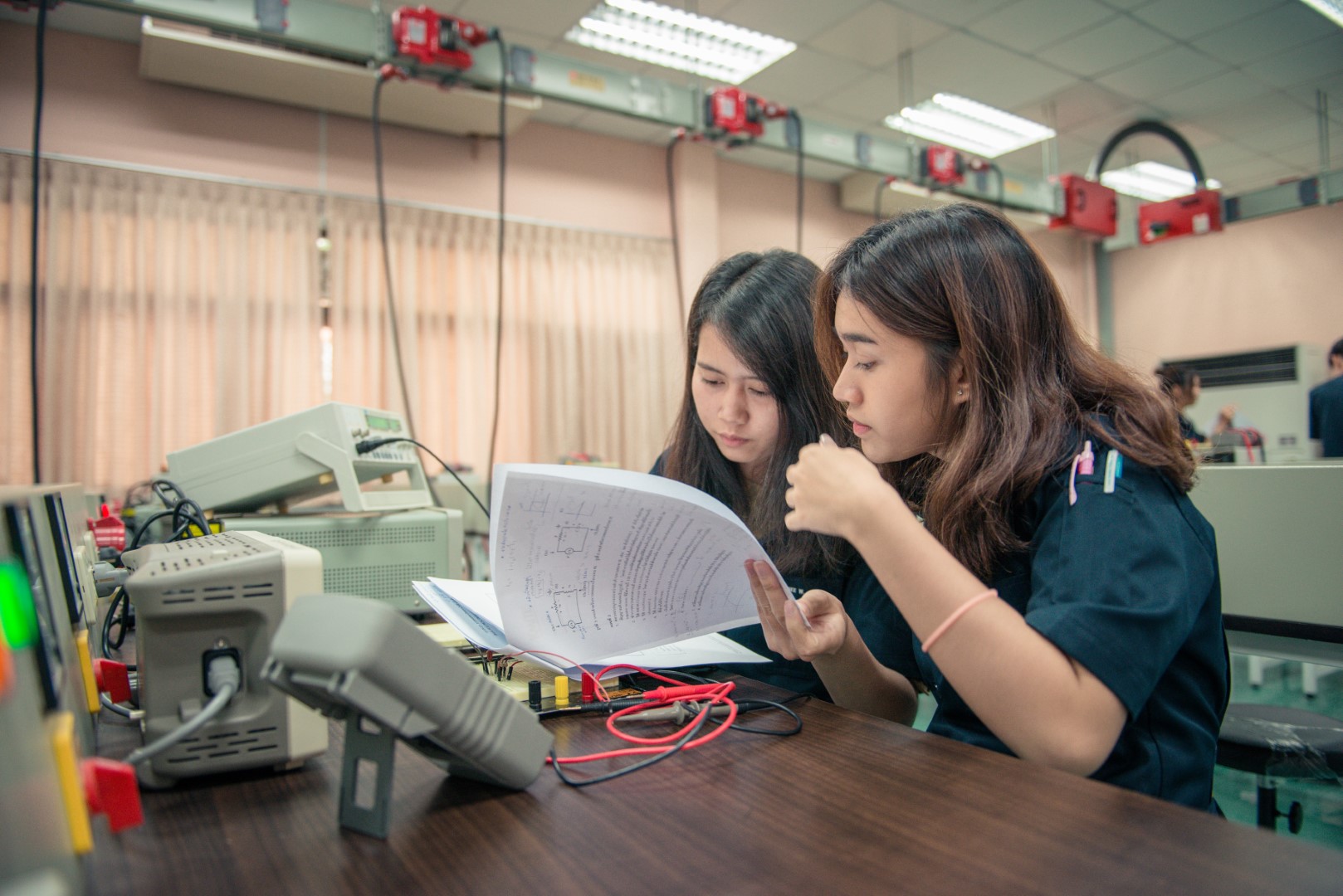
Through hands-on practice and guidance, students will learn a great deal about being a handy electrical power engineer. Apart from technical knowledge, soft skills required to be an outstanding engineer, such as creativity, communication, and collaboration in problem-based learning, are also provided.
Courses Example
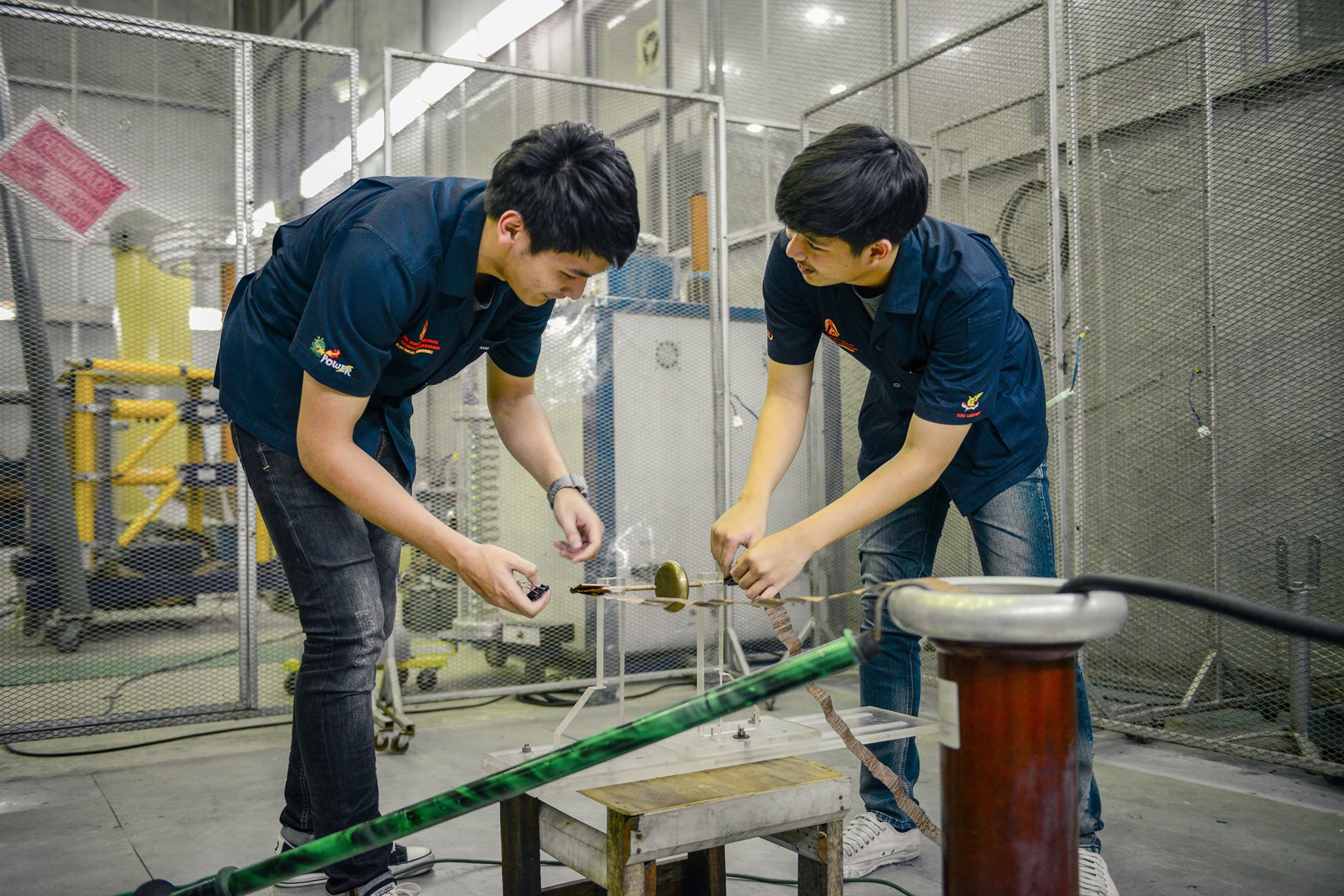
High Voltage Engineering
Electrical Machines and Drives
Renewable & Energy Management
computer programming
Power Electronics
Power System Analysis
Curriculum Overview
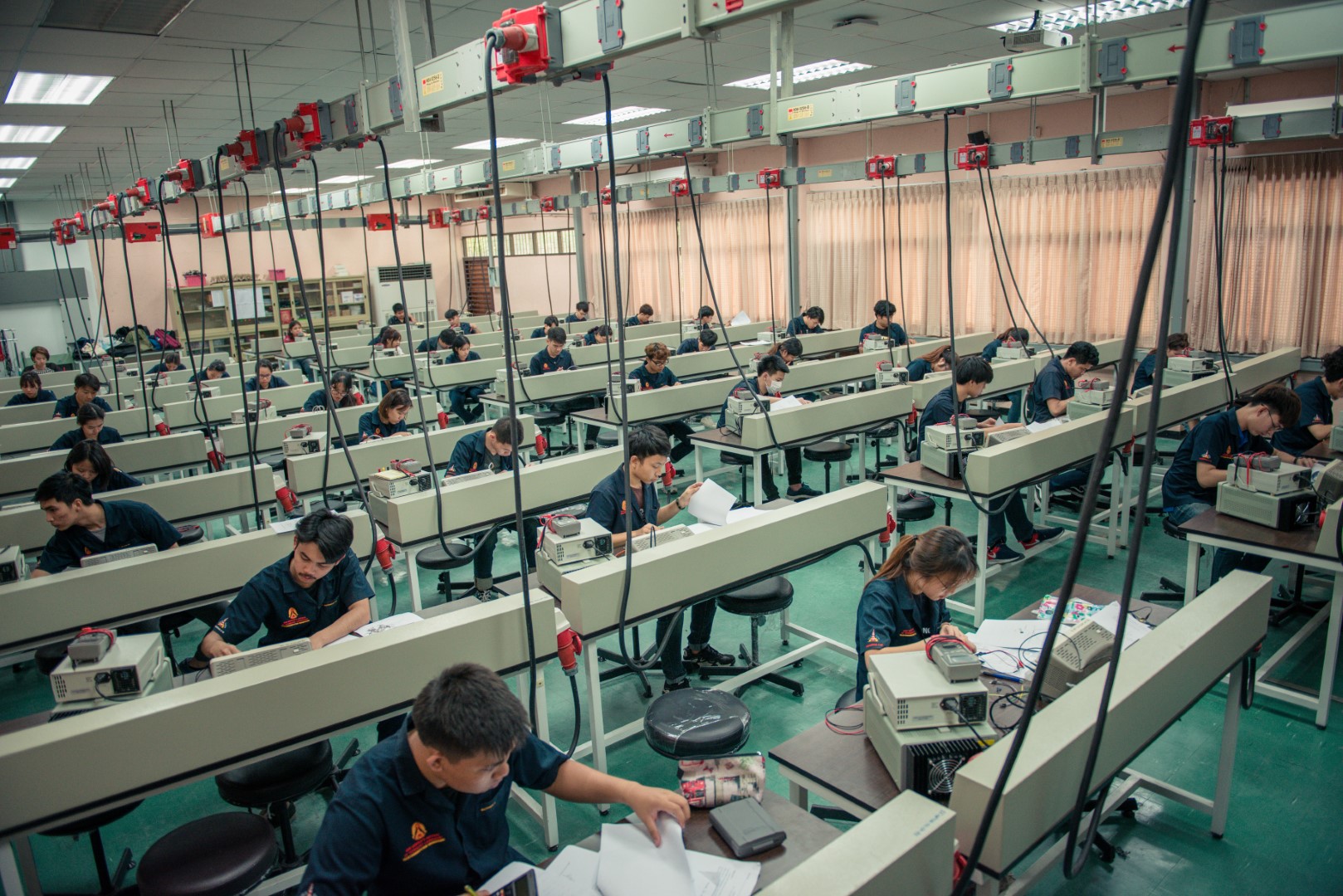
The program aims to offer all our students a broad and balanced curriculum that provides rewarding and stimulating activities to prepare them for working internationally and professionally.
The program is accredited by the Council of Engineers, Thailand (COE). Graduated students are eligible to take the exam and get a professional license in electrical engineering from COE.
General education ( 30 Credits )
Innovative Communication Design, Methods for Innovations, Innovation Management, Lean Startup and Agile Business, Emerging Trends in Engineering, Introduction to Environmental Principles, Leadership and Personal Development.
Electrical engineer ( 109 Credits )
Mathematics, Basic sciences, Electrical engineer foundation, Compulsory in Electrical power engineering, Elective courses.
Free elective ( 6 Credits )
Free elective courses allow students to select from other programs to earn more experience and knowledge in their areas of interest.
Year 1
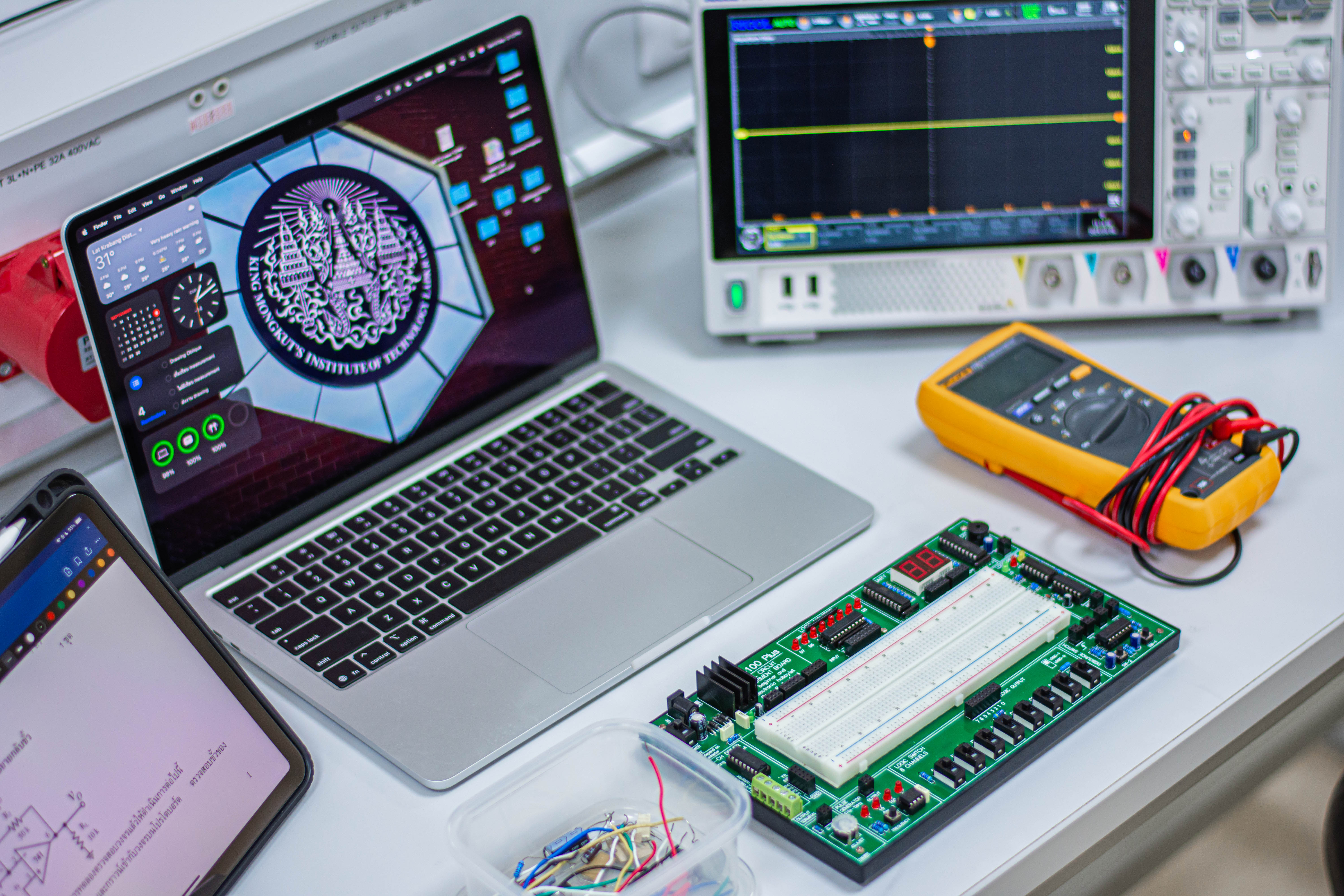
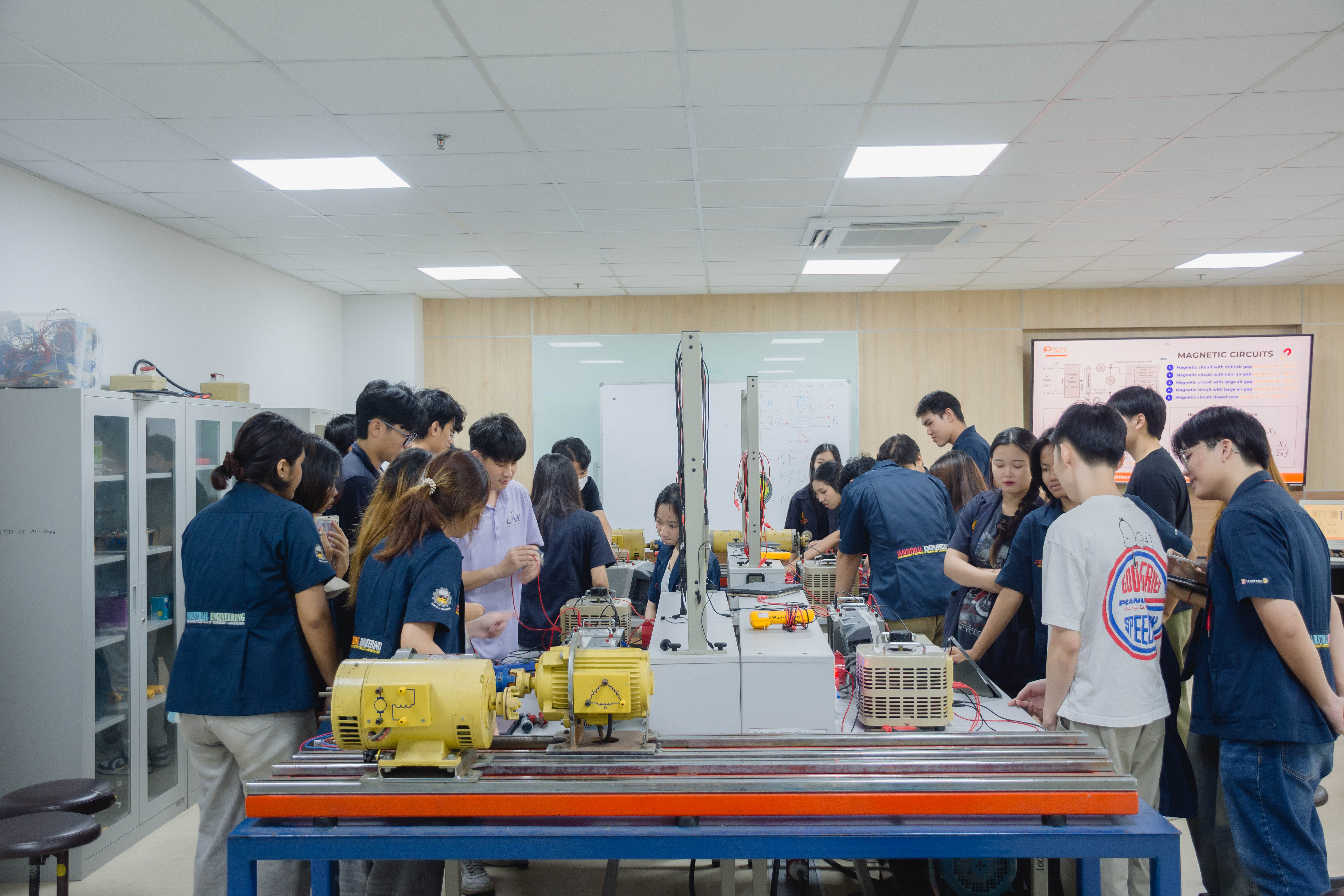
Students will study in engineering mathematics, natural science, and engineering fundamentals. Subjects include Engineering Mathematics I/II, Physics & Lab I/II, Chemistry & Lab I/II, Engineering Drawing, Computer Programming, Electric Circuits, Language I/II, etc.
Study plan – Semester 1, Semester 2
Year 2
Students will study a broad range of engineering topics, with a focus on electrical and power engineering. The curriculum is supported by laboratory work and mini-projects that reinforce theoretical knowledge. Key subjects include Engineering Materials, Engineering Mechanics, Digital Devices, Circuits and Systems, Engineering Electromagnetics, Engineering Electronics, Fundamentals of Electrical Machines, Electrical Engineering Materials, Renewable Energy, Microprocessors and Microcontrollers, Fundamentals of Electrical Power Engineering, and Electrical Instruments and Measurements, as well as Language III/IV courses.
Study plan – Semester 1, Semester 2
Year 3
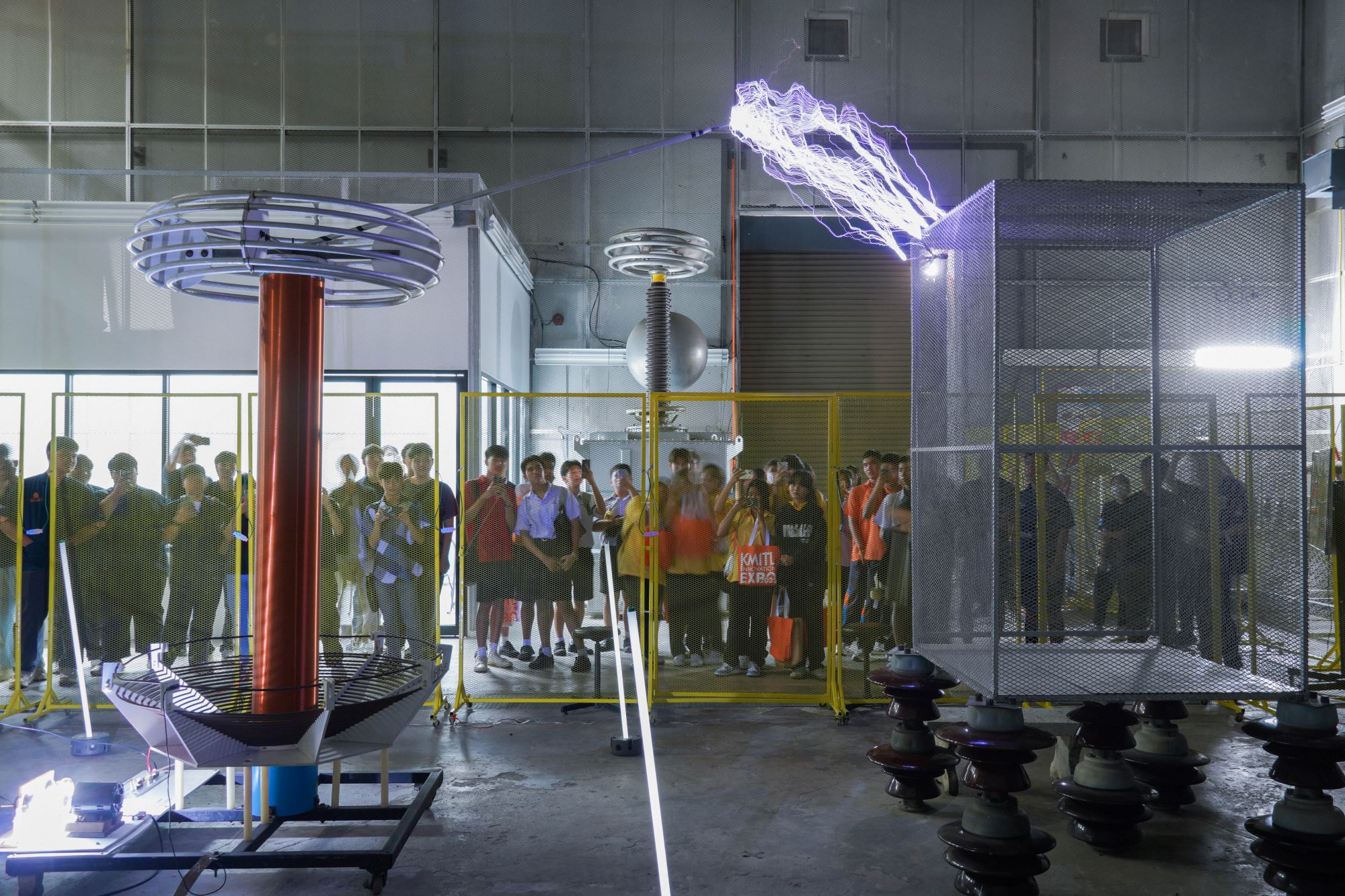
Students will specialize in electrical and power engineering, developing the ability to analyze and evaluate complex engineering problems. Key subjects include Probability and Statistics for Engineering, Signals and Systems, Power Electronics, Electrical Power Systems, Electrical Machines and Drives, Control Systems, Power System Analysis, High Voltage Engineering, Power System Protection, and Electrical Engineering Laboratory I/II.
Study plan – Semester 1, Semester 2
Inductrial Internship
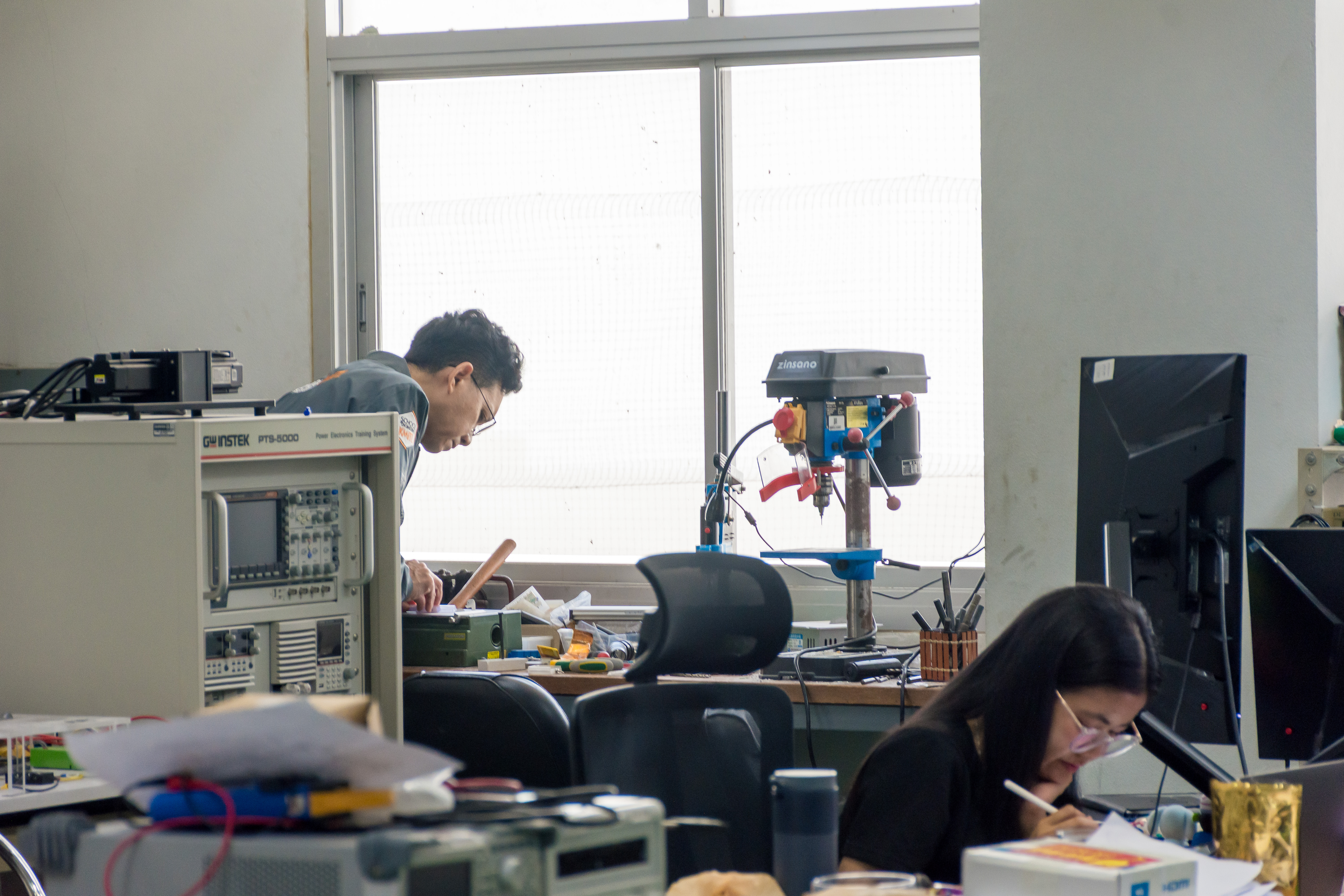
Before entering the fourth year, students undertake a three-month internship with national or international companies in related industries, gaining practical experience from a range of available placements.
Year 4
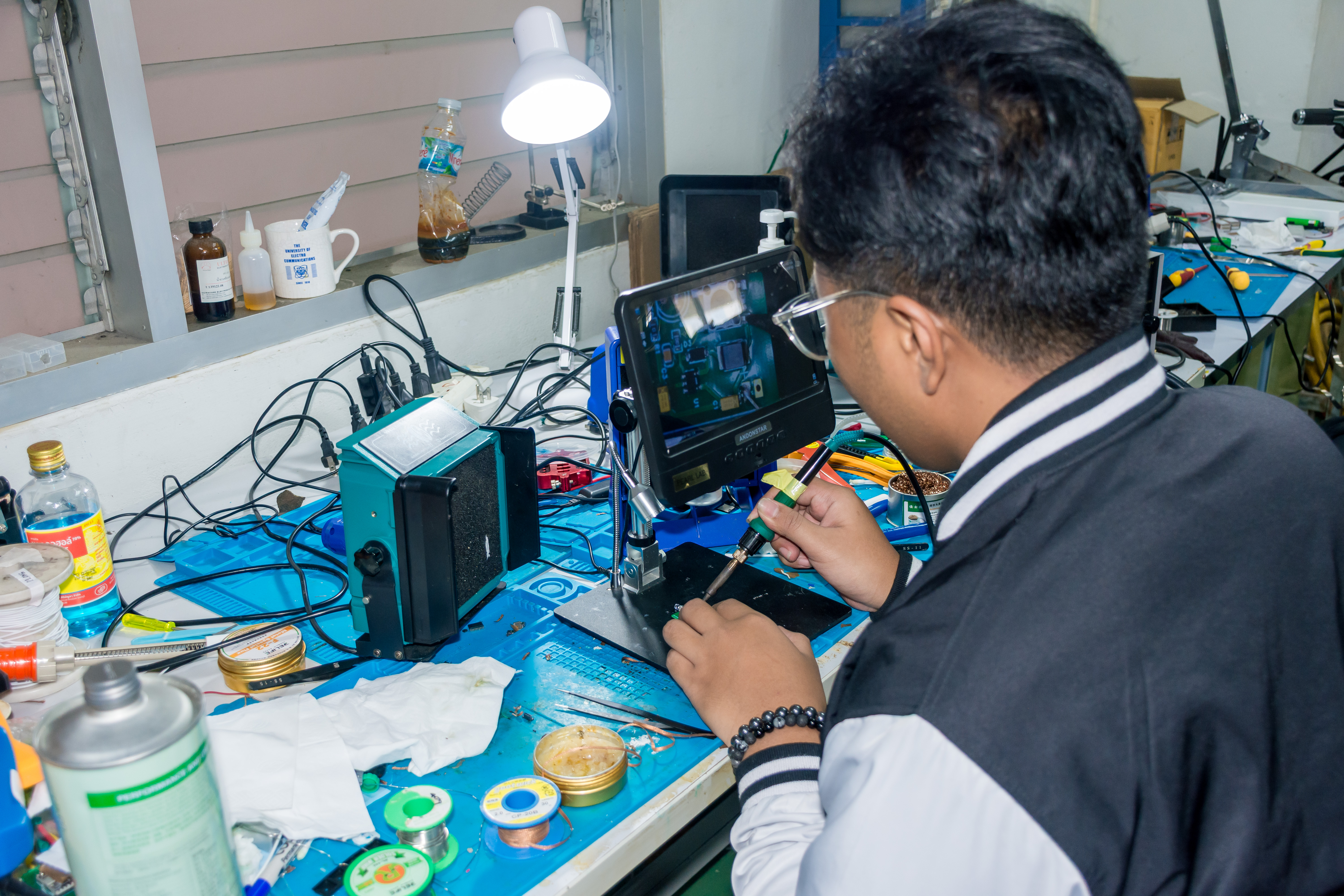
Students may choose to work in groups on a year-long project, pursue an individual industry project through a cooperative education program, or undertake overseas training at a partner university or company. Most coursework during this stage consists of elective and general education subjects.
Contact us
Please set the ‘Contact Form’ component shortcode